
Your salespeople aren't selling. Not for most of the week, anyway.
In the sales teams I've measured, including my own, salespeople spend about a tenth of their time in live conversation with someone who might buy. I help B2B businesses rebuild the structure that produces this result, then put AI to work invisibly behind the people.

I cut my own sales team by 75%, grew revenue by 44% and reduced sales and marketing spend at the same time.
Before AI could do any of it.
At ECSC Group plc, the cyber security company I built from startup to flotation on the London Stock Exchange. The full account, with the numbers, is in the book.
Where the other 36 hours go
Proposals. Lead generation. Admin. Delivery support. Arguing about commission. None of it is selling, and most of it is done by the most expensive commercial people you employ.
That isn't a criticism of the people. It's what the structure asks of them.
The usual remedies
Each one adds to a week that is already full of the wrong things.
- More salespeopleMore people with the same week, so the selling stays at a tenth.
- Higher commissionPays people to hold accounts, protect their win rate and over-qualify. Effort was never the constraint.
- A sales directorA repair on a structure that shouldn't need one, spending the week on commission disputes, account ownership and forecasts.
- A new CRMOne more system for salespeople to feed, on time that should be spent with prospects.
- AI tools for the teamThe tool trap: licences, training days and adoption programmes, with the salesperson as the operator.
None of them examines the structure that produced the week.
The Machine Model
Your org chart is a picture of authority, not of work. The Machine Model maps the flow instead: what happens to a prospect, a client, a proposal or a problem, and which specialised function handles each part.
- Prospect Marketing
- Identifies and warms organisations that aren't yet clients.
- Sales
- Persuasion only. Converts a warmed prospect into someone who is likely to buy, then hands over. No proposals, no accounts, no administration.
- Sales Support
- Takes the non-selling work: research, preparation, follow-up, co-ordination and systems.
- Client Services
- Owns every client relationship. Facilitates purchases, new and existing, including the proposal and the quote, and brings in the specialists a deal needs. Does not persuade.
- Client Marketing
- Markets your other service lines to people who already buy from you. The function most businesses don't have.
The structure is the easy part. What holds it in place is how you pay people: you cannot build a machine where the parts are paid to move. So individual commission goes, replaced by fixed pay set from each person's own earnings history.
AI your salespeople never have to operate
In my own business, Sales Support was a team of people, and the model worked without the efficiencies of AI.
Most AI sales products assume your salesperson is the operator. Here the AI sits behind the people, and salespeople reach it exactly the way they would reach a capable colleague.
- EmailA request for a proposal, drafted in the house style, then reviewed and approved in Client Services.
- Voice message"Research this company and prepare a briefing – I'm with their chief executive tomorrow morning." The briefing arrives before the meeting.
- The CRMNothing goes in by hand. Records and next actions appear because the salesperson said what happened.
- The calendarWork they asked for arrives attached to the appointment it belongs to.
A voice message, left in the car park after a meeting
"Just finished with the Huddle Group in Leeds. Sally, Ops director, two of her engineers, Amir, and John. They're expanding the site next spring and their current supplier can't handle the volume. She's worried about the transition more than the price. Can you put a proposal together – emphasise the implementation support, and use the case study from the food manufacturer, not the automotive one. Their board meets in three weeks, so she'll want it by the end of next week."
That evening the draft exists. Before it goes anywhere, someone in Client Services reviews and approves it. The salesperson has driven to their next appointment.
AI drafts. A named person reviews, approves and sends.
What it looks like in a client
I don't name clients. Many are understandably sensitive about the AI element being public, and with a cyber security background, anonymity is my first instinct.
An IT technical consultancy of 50+ people
Six-month engagement
Five people in sales were doing less than one person's worth of client-facing selling between them. Two stayed on as new-client hunters on fixed pay, one moved into Client Services, and the function was rebuilt around them.
- Cost of sales halved.
- Tenders: a tender-writing system now drafts the responses, so more tenders are answered with almost no drafting by salespeople.
- Each hunter has a personal assistant behind them running their CRM, their email, and their daily schedule and activity plan, with outcomes tracked.
Twenty-eight hours of selling a week, against about four now
That's the 70% target, and the design goes beyond it once the support layer is working. Modelled, not measured, and most of the gain arrives before any technology does.
How an engagement runs
Structure and pay first, technology second. Nothing is restructured until the baseline is in, and if the numbers say this isn't for you, you stop with better information than you started with and nothing to unwind.
-
Discovery call and target setting
A focused conversation about your current sales set-up, the challenges you're facing and your growth objectives, to decide whether this approach fits your business at all. If we both see potential, a target-setting session follows: what realistic goals look like for you, and a plan we agree before anything starts.
-
Baseline
Built from your existing records: calendars, the CRM, proposals and pay history. It gives you your selling-time percentage and your cost per hour of genuine selling, the two numbers everything else is measured against. No announcement, no restructure, no technology, and nobody's pay or job changes.
-
Design
Your version of the Machine Model: every commercial activity placed in the function where it belongs, the roles that follow from it, and a pay model that stops rewarding people for fighting the machine.
-
The first ninety days
The structural change, made whilst you carry on selling. Five measurements, read monthly on one page: selling time, cost per selling hour, turnaround and quality, breadth of prospect engagement, and client service quality.
-
AI behind the people
Built for the work your salespeople hand over: tenders, proposals, research and briefings, follow-up and the CRM. Each piece has an owner, limits on what it draws on, and a named person who approves what it produces.
Is this for you?
Built for
An established B2B business that sells expertise or service, with a sales team already in place, typically somewhere between five and fifty salespeople. Clients who buy more than once, and enough prospects to keep salespeople selling.
Not yet
If you're early-stage and still selling the first clients yourself, take the measurement habit and the pay principle now. Come back for the structure when the ninety per cent has started accumulating. It will.
Not for
A leadership determined not to engage with AI. Sceptical is fine. Deferring the subject indefinitely because it's uncomfortable isn't: the structural gains would still be yours, but the AI gain would go to somebody else in your market.
Re-Engineering B2B Sales in the AI Age
Written for chief executives, owners and sales directors of B2B businesses with between five and fifty salespeople. It attacks the structure, never the people, and gives you a working alternative.
- Measure the 10% Problem in your own business, in an afternoon, by asking.
- Separate sales from service, so that salespeople do nothing but sell.
- Replace individual commission with a pay model that stops rewarding people for fighting your own machine.
- Put AI behind the human interface (email, voice, calendar) so that nobody learns a single new tool.
- Make the change in ninety days, with the measurements that prove it worked.
You can do all of it without me. The method is in the book. If you'd rather not do it alone, helping businesses through exactly this is what Sales Re-Engineering exists for.
Available on Amazon from mid-November 2026
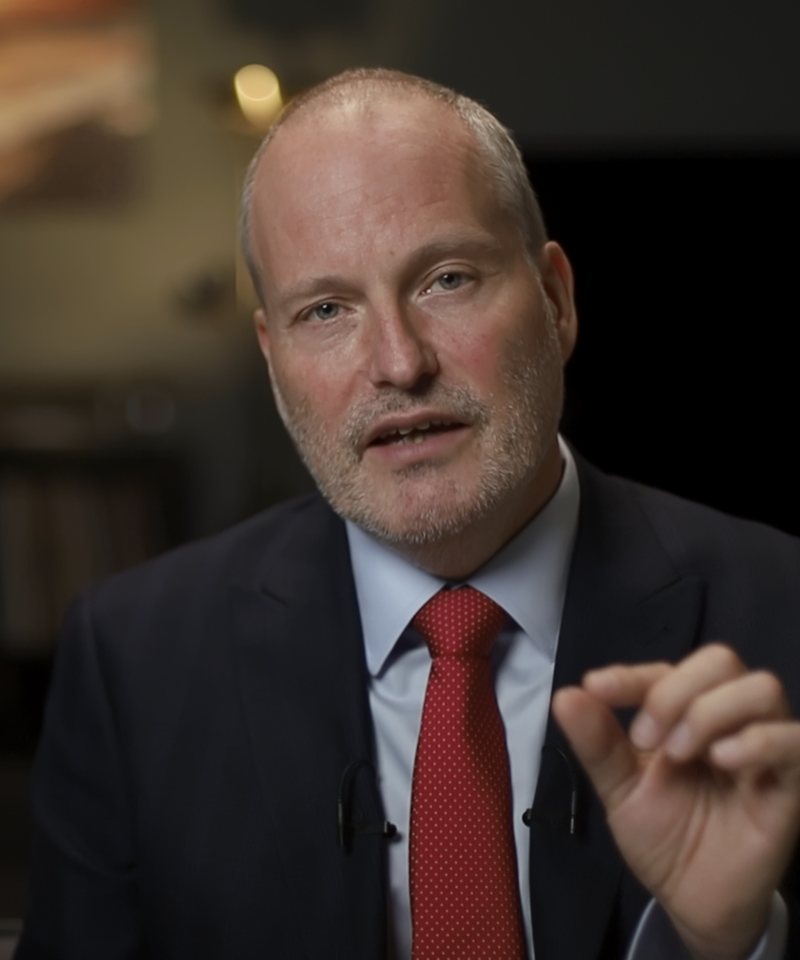
Ian Mann
Founder and Chief AI Officer, Sales Re-Engineering UK
I built cyber security company ECSC Group plc from startup to flotation on the London Stock Exchange, and re-engineered its sales function along the way.
It started on a BMW forecourt in 2012, when two people behind a service desk gave me the most useful piece of business education I have ever received. That morning led, eventually, to a quarter of the salespeople, nearly half as much revenue again, and a smaller sales and marketing budget.
I'm also the author of the Hacking the Human series and The Connoisseur Code. Because my background is security, client anonymity and the handling of your data are first instincts rather than afterthoughts.
The questions chief executives ask
If the salesperson hands over before the purchase, who closes?
Think honestly about your last ten significant wins. In most modern B2B the decision is made when your salesperson isn't present: in a procurement review, on a spreadsheet comparing three suppliers, in a board paper. What decided it was the quality of the thinking your salesperson put into the prospect's head weeks earlier. That's what this model protects.
Won't clients follow my best salesperson out of the door?
Clients stay for the quality of what you deliver. You probably already own the proof: the good salesperson who left and took nobody, or next to nobody. If you want to test it, ring five of your largest clients yourself and ask what would make them leave. In my experience nobody names the salesperson.
Do my salespeople have to learn new AI tools?
No. Ask your salespeople which AI tools they operate and the right answer is a puzzled "none". They brief it by email, voice message, the CRM and the calendar, the way they'd brief a colleague. If they have to open, choose, configure or remember how something works, it's a tool, and that's the trap this approach avoids.
What happens to commission?
Individual commission goes, because in a model where marketing, sales, client services and support jointly produce a win, no individual owns the result. The common destination for clients is a fixed salary with something modest and team-related above it. The pay change comes at the same time as the structure, never after.
What if my sales director resists?
Some sales directors see it straight away and some find it much harder, which is a rational response: the model removes commission arbitration, account refereeing and forecast rituals from their week. The best move available to them is to lead the analysis, because they know things about your clients and your bigger deals that you don't. The book has a chapter on managing exactly this.
Is the AI pretending to be a person?
No. The human-like interface is for your salesperson's convenience. Anything that reaches a client has been reviewed and approved by a named person in your business.
What about our data and our information security team?
Every piece of the AI layer is specified before it's built: what it may draw on, where it runs, who owns it and who approves its output. We'll take your information security team through the supplier chain, including hosting regions, data retention and subprocessors, so they can assess it the way they'd assess any other supplier.
Do we need to change our CRM or other systems?
Not as a rule. The AI layer works with the systems you already have, and your salespeople keep using the same email, phone and calendar they use now.
How long does it take?
Typically the change process takes 3 to 6 months.
Start with the numbers
A discovery call covers where your salespeople's week actually goes, what an hour of genuine selling is costing you, and whether any of this applies to your business.